The Storyteller’s Yellow Pages
Personhood can get lost in healthcare. Files pile up, acronyms multiply, and the human at the centre becomes a collection of notes and tasks. Our conversation with Common Language DST facilitator Lisa Joworski focuses on a simple counterweight: stories. We talk about short, meaningful videos, guided autobiography, podcasts, and even tattoos and scars as entry points to identity. The aim is not art for art’s sake; it is care that sees the whole person. When a nurse, aide, or physician has even a two-minute window into someone’s essence, decisions soften, empathy rises, and communication improves. That is the promise—and the practice—of capturing essence for care.
The core of this approach is digital storytelling: brief films crafted with a trained facilitator using a first-person script, personal photos, and light editing. These stories give voice and context, especially in dementia care where memory, language, and behavior shift. We examine why ownership matters—stories belong to storytellers, even when projects are funded by organizations—and how alignment among funders, facilitators, and participants prevents harm. A clear elevator pitch helps set expectations, so we break down how to create one: a tight script, explicit scope, transparent process, and a next-step invitation to view examples or join an intro session.
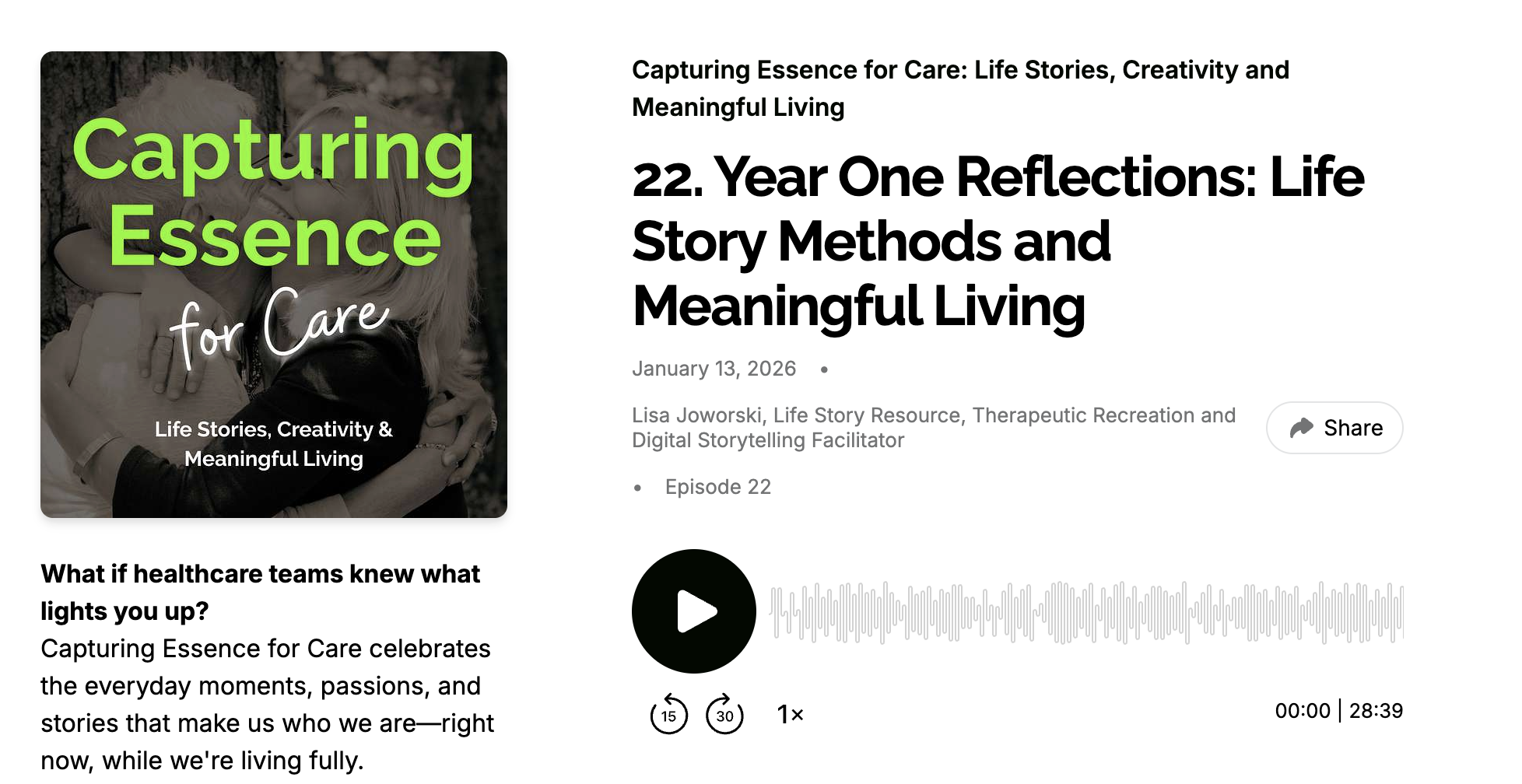
Listen to Lisa’s new elevator pitch here
We also explore a broader ecosystem. Not everyone wants or needs a digital story. Some prefer music, photo essays, written memoirs, or collaborative audio recordings. A connector model—a modern “yellow pages” of life story resources—can meet people where they are. This directory could list facilitators, videographers, guided autobiography groups, creative arts therapists, and do‑it‑yourself kits. The value is choice. Families can pick a path that fits time, budget, privacy, and cultural needs, while professionals can find tools that translate quickly at the bedside.
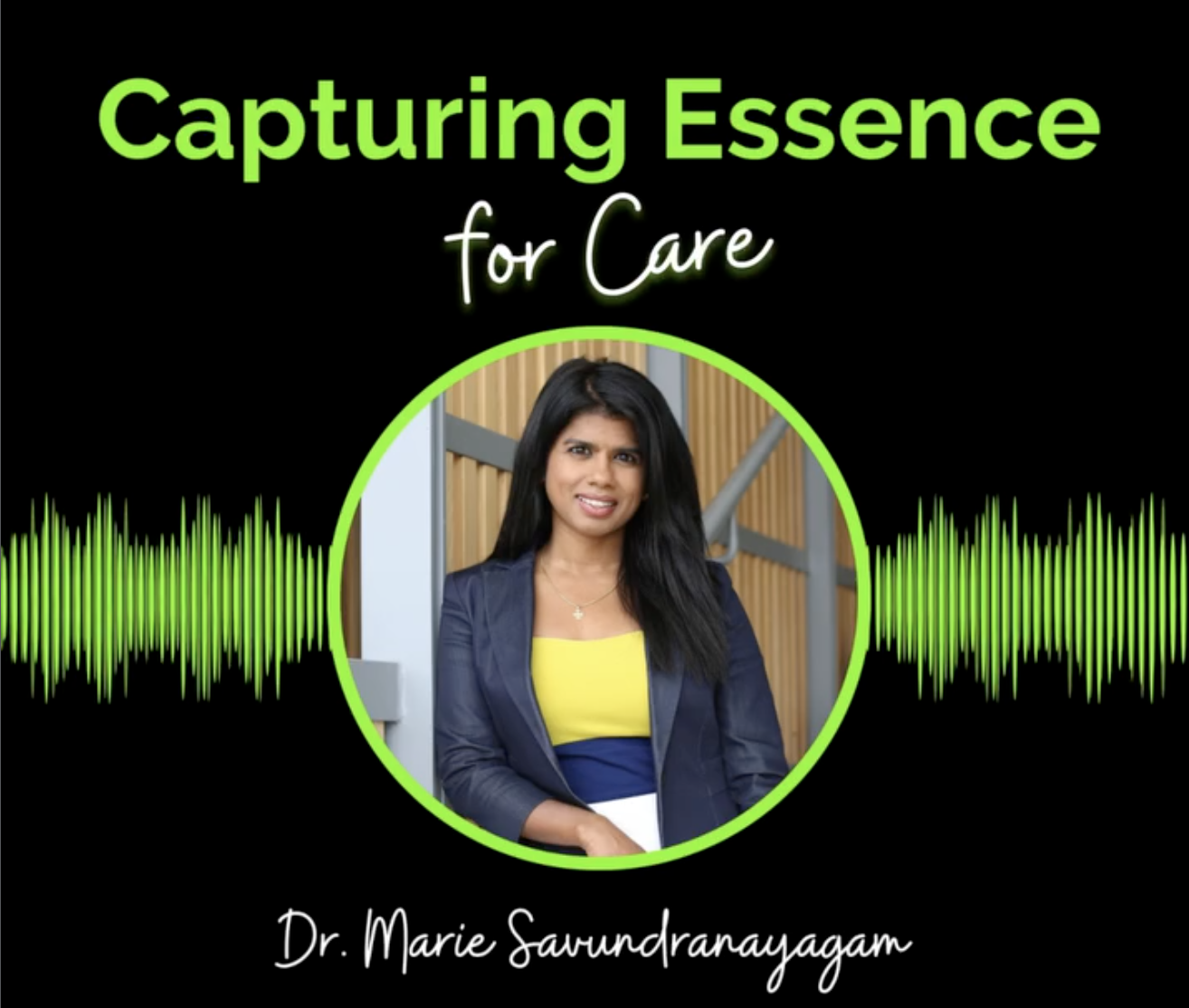
Technology widens the lane. We highlight a VR training program teaching person-centered communication through avatars and scenario practice. For staff who don’t have a one-page profile or life story at hand, VR can sharpen attention to environmental clues—photos on the wall, items by the bedside, posture, tone, and pace. Reading the room is a teachable skill.
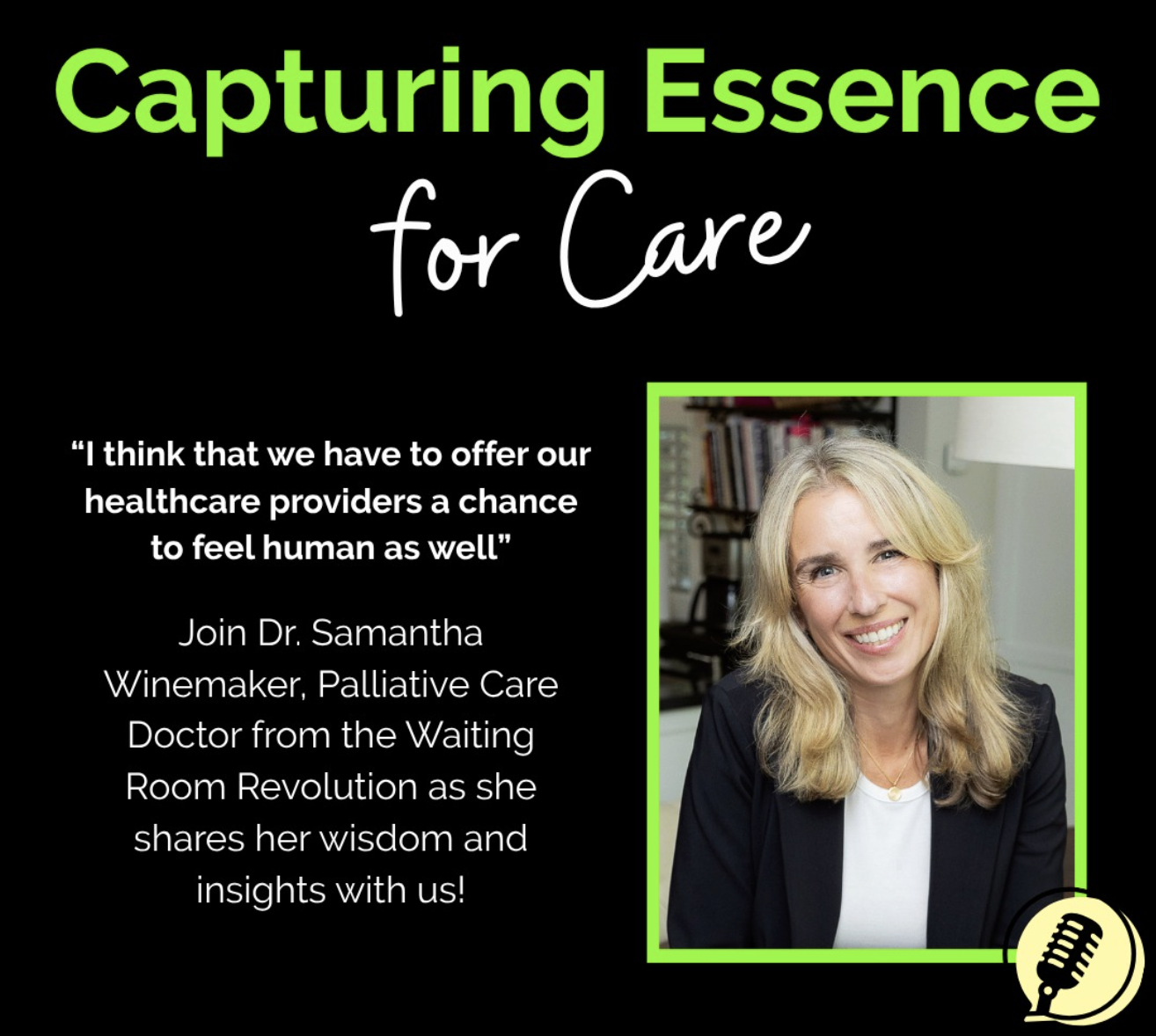
Combine that with simple artifacts—one-page overviews, a bookmarked story link, or a private family podcast—and teams can act with more confidence and calm. In palliative settings, frameworks like the Waiting Room Revolution add advocacy skills and shared language when stakes are high.
Creation is also reflection. Drafting a story forces clarity: What truly matters? Which moment carries the weight? Hosts and guests describe using AI as a supportive first draft tool, not a final author—useful for outlines and phrasing, but refined by human voice. They share how time and distance after a project reveal impact, like Beth’s experience of empowerment at a Story Slam. And they remind us that story prompts hide in plain sight. Ask about a tattoo or a scar and you access memory, values, and identity fast.
Episode 51 Key Messages
0:47 Lisa’s New Podcast and Story Slam
2:43 Clarifying the Mission: Essence For Care
4:45 From Data to Personhood in Healthcare
7:35 Becoming a Connector and Resource Hub
9:50 Many Paths to Story: Music, Photos, Writing
11:45 Community of Practice and Ownership Ethics
14:10 Crafting an Elevator Pitch with Video
16:30 Inviting Guests and Lived Experience
19:20 Beth’s Digital Story and Impact
22:10 Story Slam Details and Submissions
24:35 Waiting Room Revolution and Advocacy
29:15 Starters, Tough Talks, and Family Care
31:05 VR Training for Dementia Communication
The throughline is community. Practitioners learn together, compare scripts, trade edits, and debrief on tough cases. Families test micro‑pilots: a three-minute explainer for a recreation therapist; a private podcast for siblings; a one-pager for night-shift staff. None of this replaces clinical care. It humanizes it. When the system is rushed, stories act like a key: they open a door that leads from tasks to understanding. That small shift—seeing essence before diagnosis—changes how care feels for everyone.
About Our Guest

Lisa Joworski works in Therapeutic Recreation and is a Life Story Resource who brings together storytellers, artists, musicians, advocates, people living with dementia, healthcare practitioners, and life story experts. Each conversation of her Capturing Essence for Care podcast offers insights and practical approaches for the beautiful ways we can honour our own stories and the stories of those we love—not just for memory's sake, but for the fullness of living and for the care we may one day need.
Listen to Lisa’s original Co-Created episode here
About Co-Created
Co-Created is a podcast that takes you behind the scenes of digital storytelling. On each episode, host Kristy Wolfe dives into conversations with the storytellers and facilitators who bring digital stories to life.
If this particular conversation resonated with you, tell a friend or a colleague about Co-Created or share one of the digital stories we were talking about. You can find the stories here.
Co-Created is presented by Common Language DST, digital storytelling facilitation training for health and wellness changemakers and is supported by the team at Snack Labs.