

 Image 1 of 5
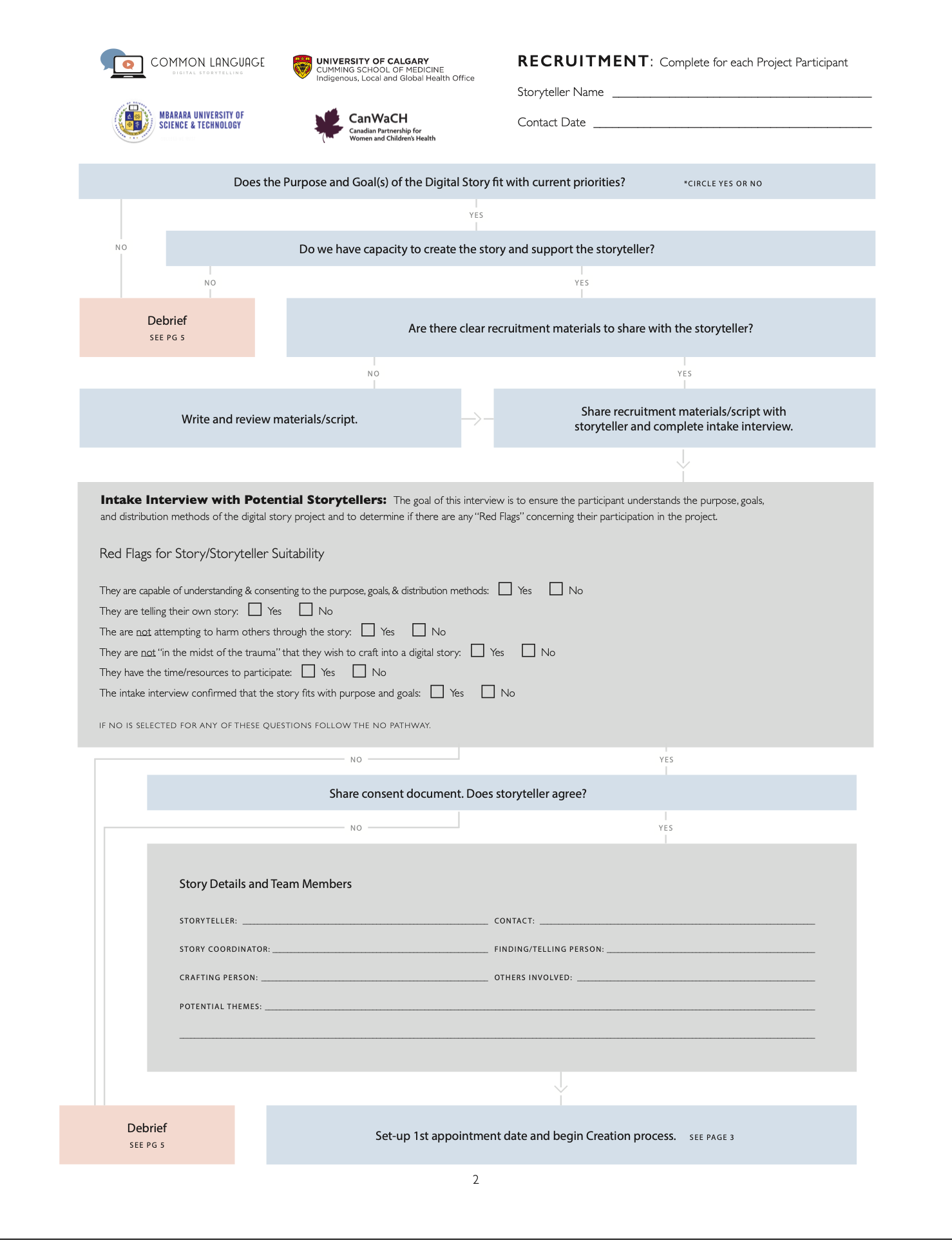 Image 2 of 5
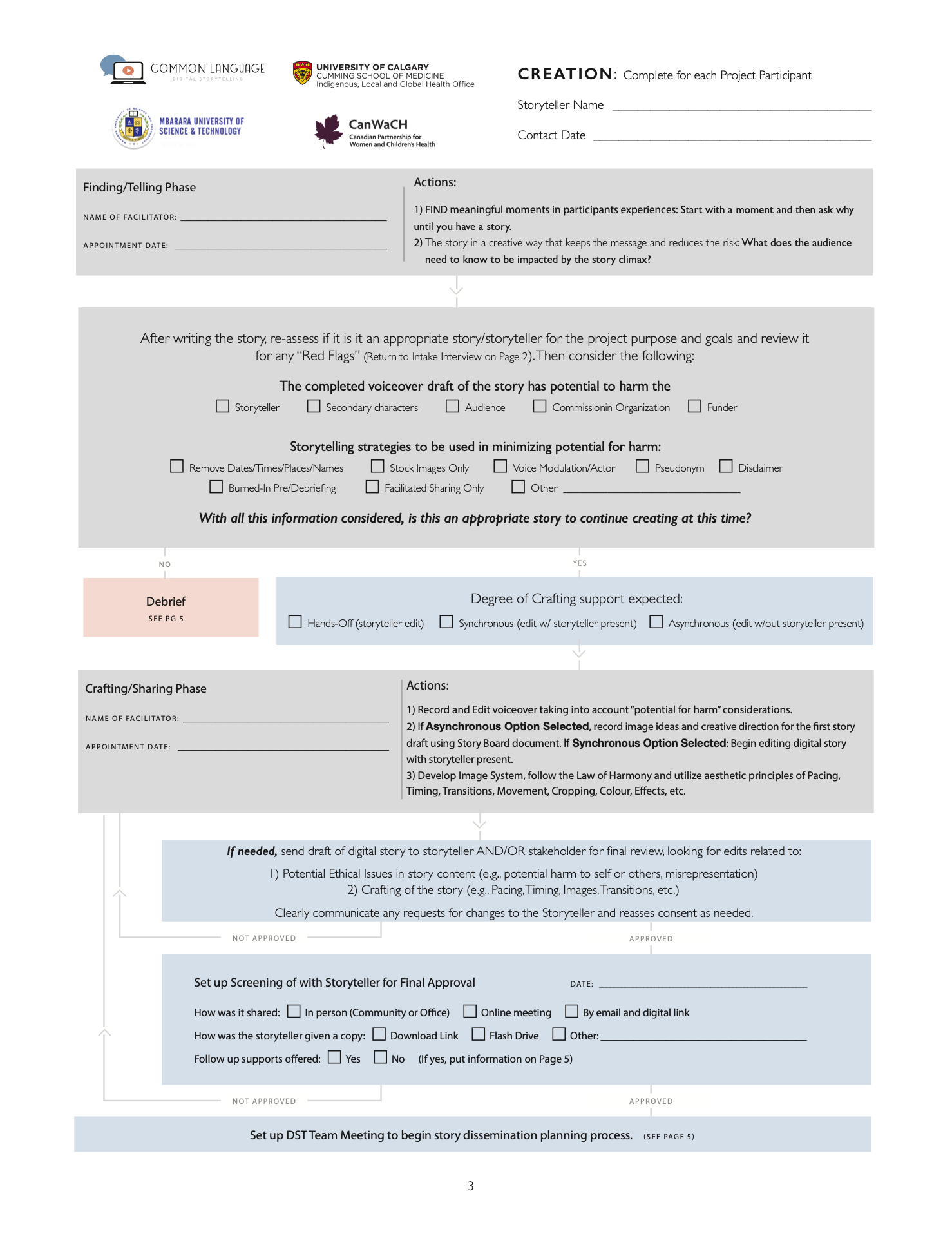 Image 3 of 5
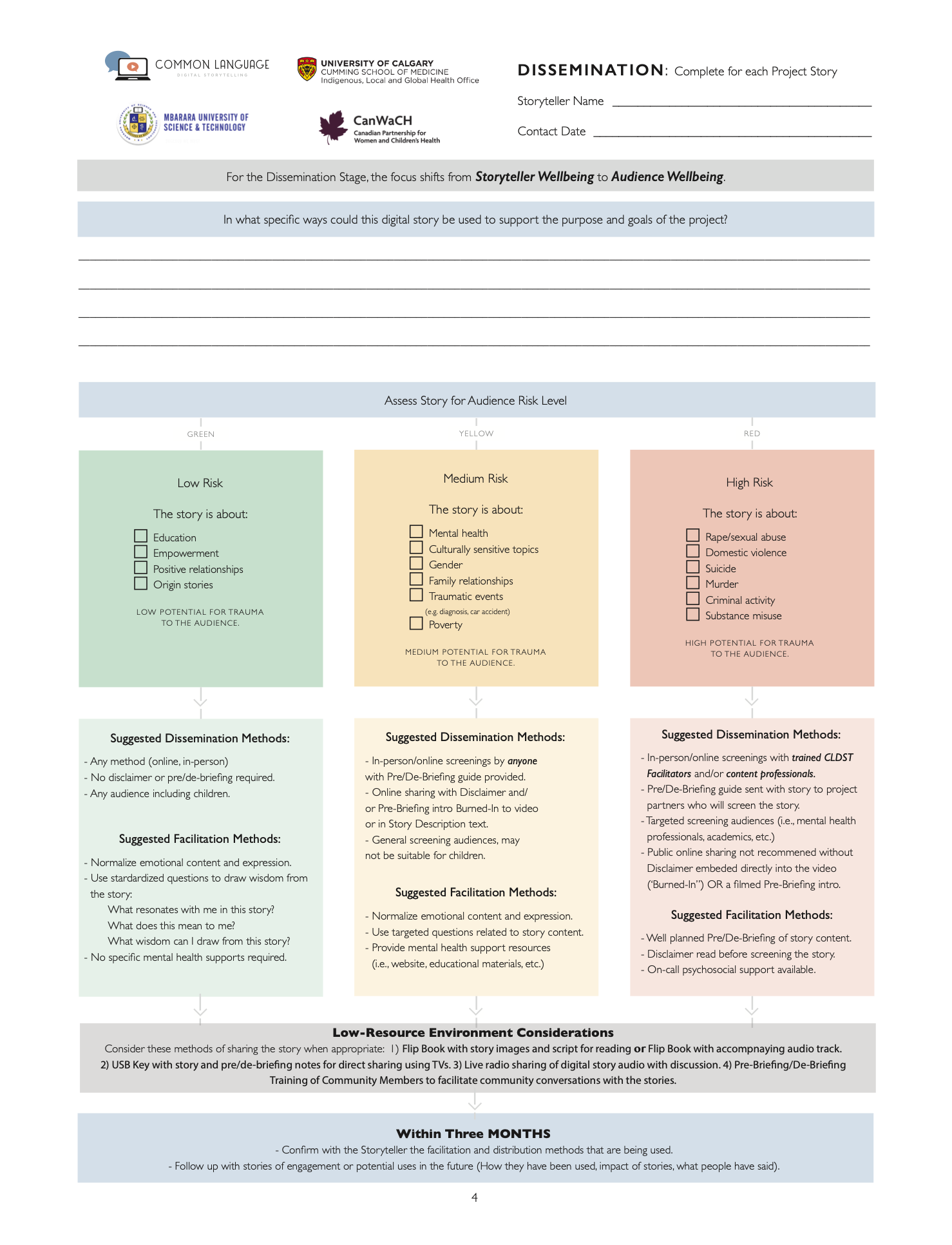 Image 4 of 5
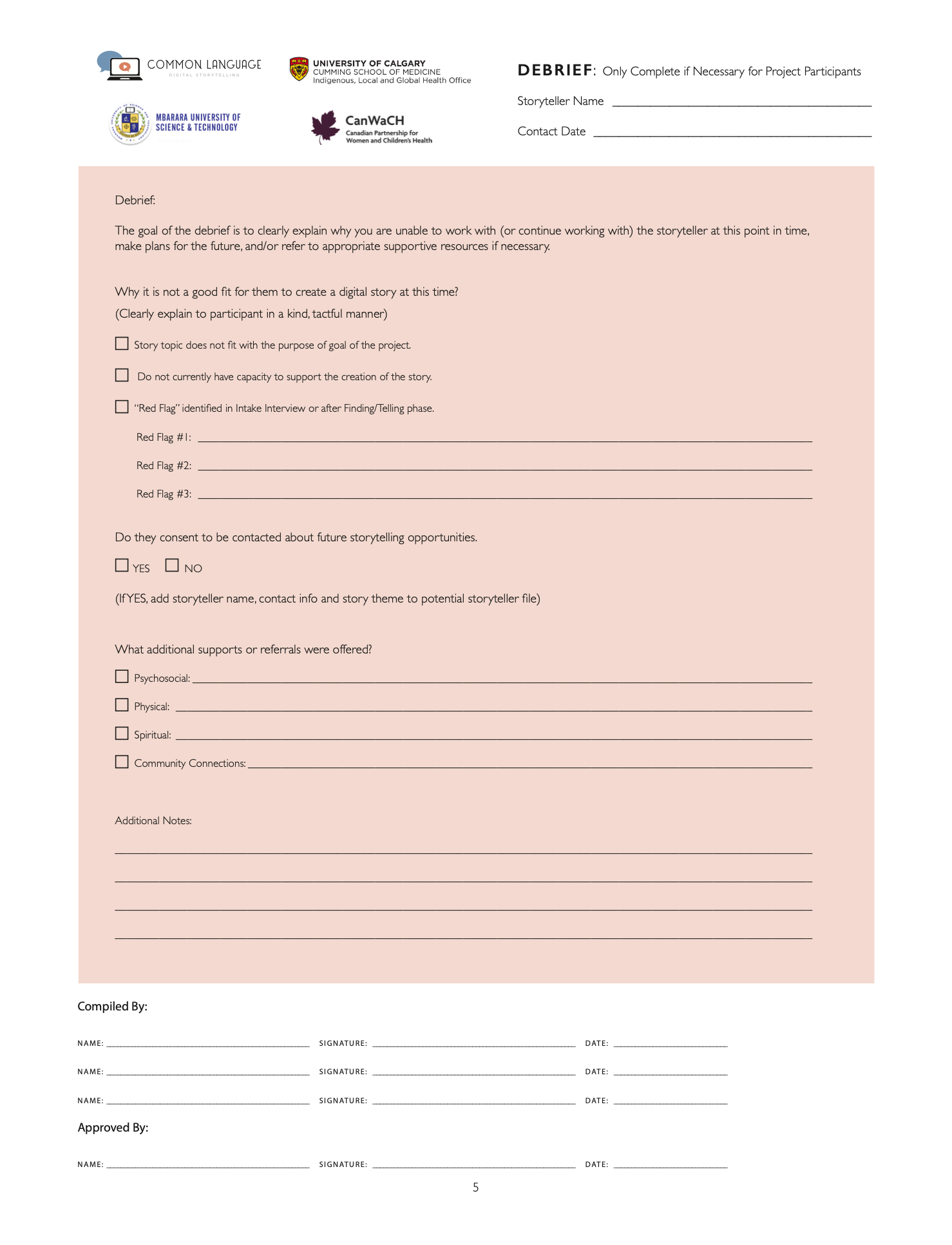 Image 5 of 5
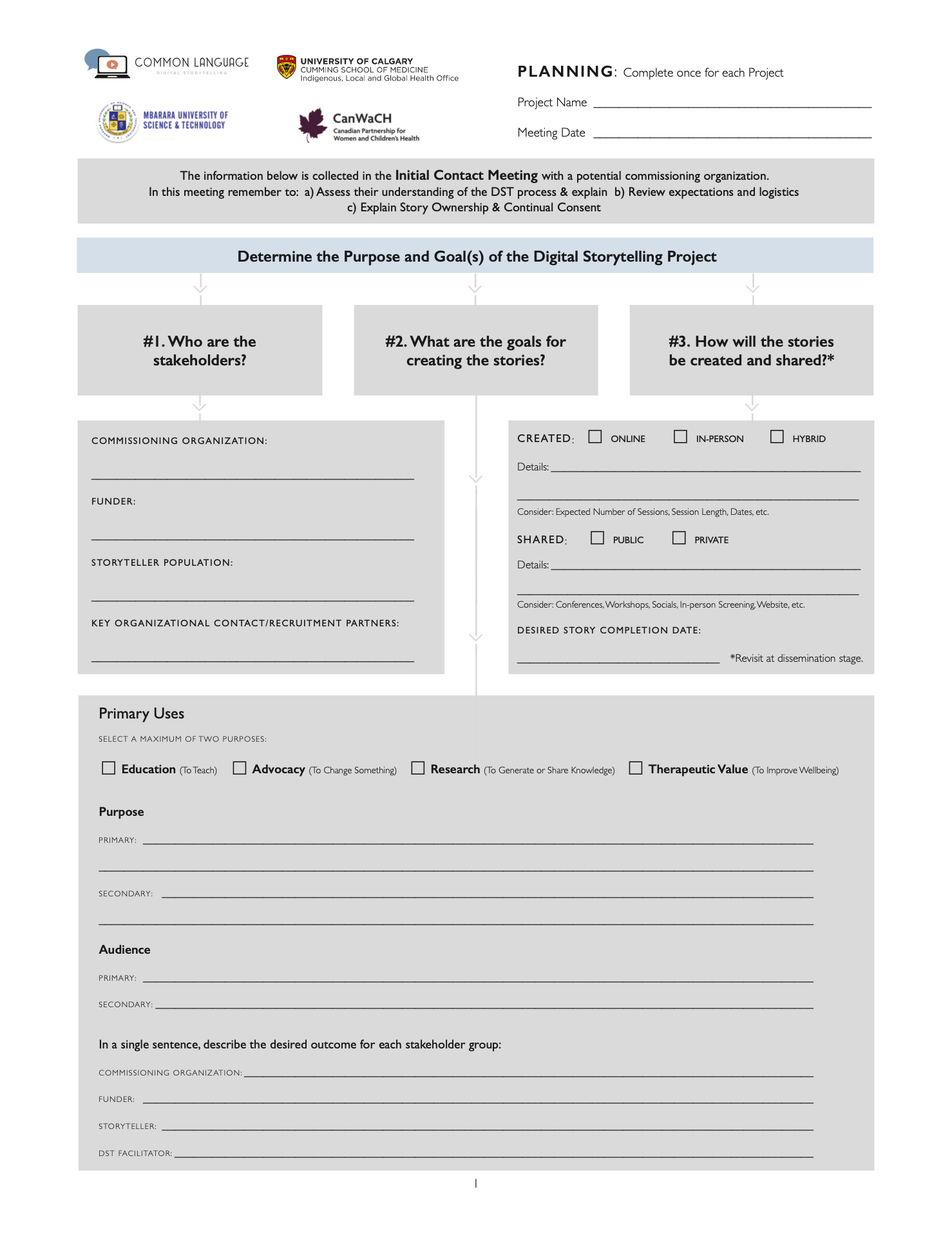
If you use this Decision Aid in your DST Facilitation practice, you will:
• Minimize the possibility of ethical breaches in your DST projects,
• Select the right storytellers to achieve the project goals and maintain or enhance their wellbeing throughout the entire process,
• Clearly communicate project goals to stakeholder groups and potential storytellers,
• Ensure you have a decision making audit trail to protect project integrity,
• Create powerful and compelling DS capable of achieving project goals,
• Ensure ethical dissemination practices and maximize story impact.
If you DO NOT use this Decision Aid in your DST Facilitation practice, you could:
• Encounter complex ethical situations that lead to unethical practices,
• Select storytellers who want to tell stories unrelated to project goals or may not be ready to participate and not support them effectively,
• Ensure one understands what is to be accomplished by creating and sharing the stories,
• Increase the potential for liability to yourself and your organization,
• Create mediocre digital stories that will not achieve project goals,
• Create more ethical issues for audiences and storytellers through story dissemination.
This is not meant to scare DST Facilitators, but to emphasize the importance of using the Decision Aid in every project. The lessons from Uganda tell us that this is an incredibly useful and comprehensive tool that will benefit every DST Facilitator in Africa and beyond.