

 Image 1 of 4
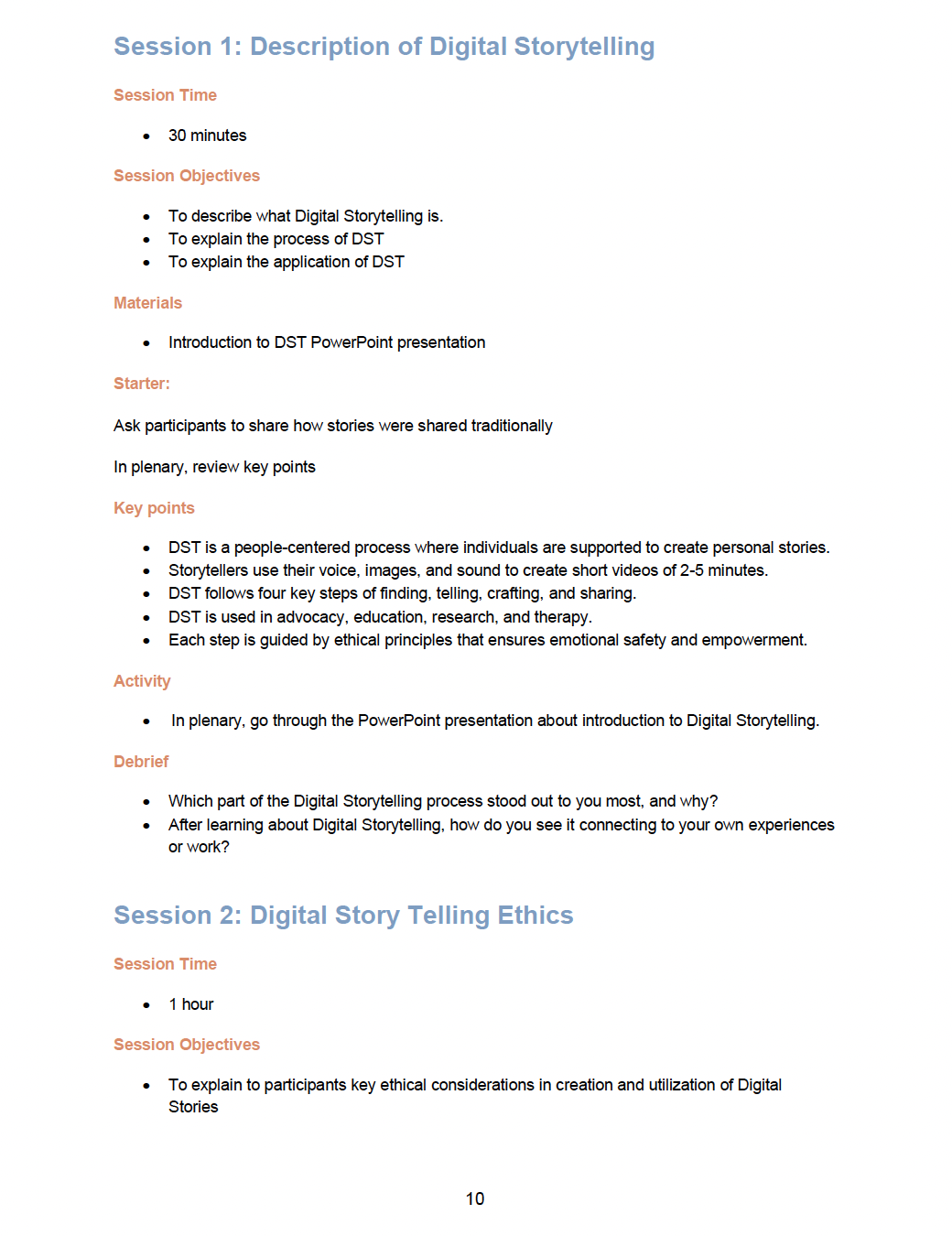 Image 2 of 4
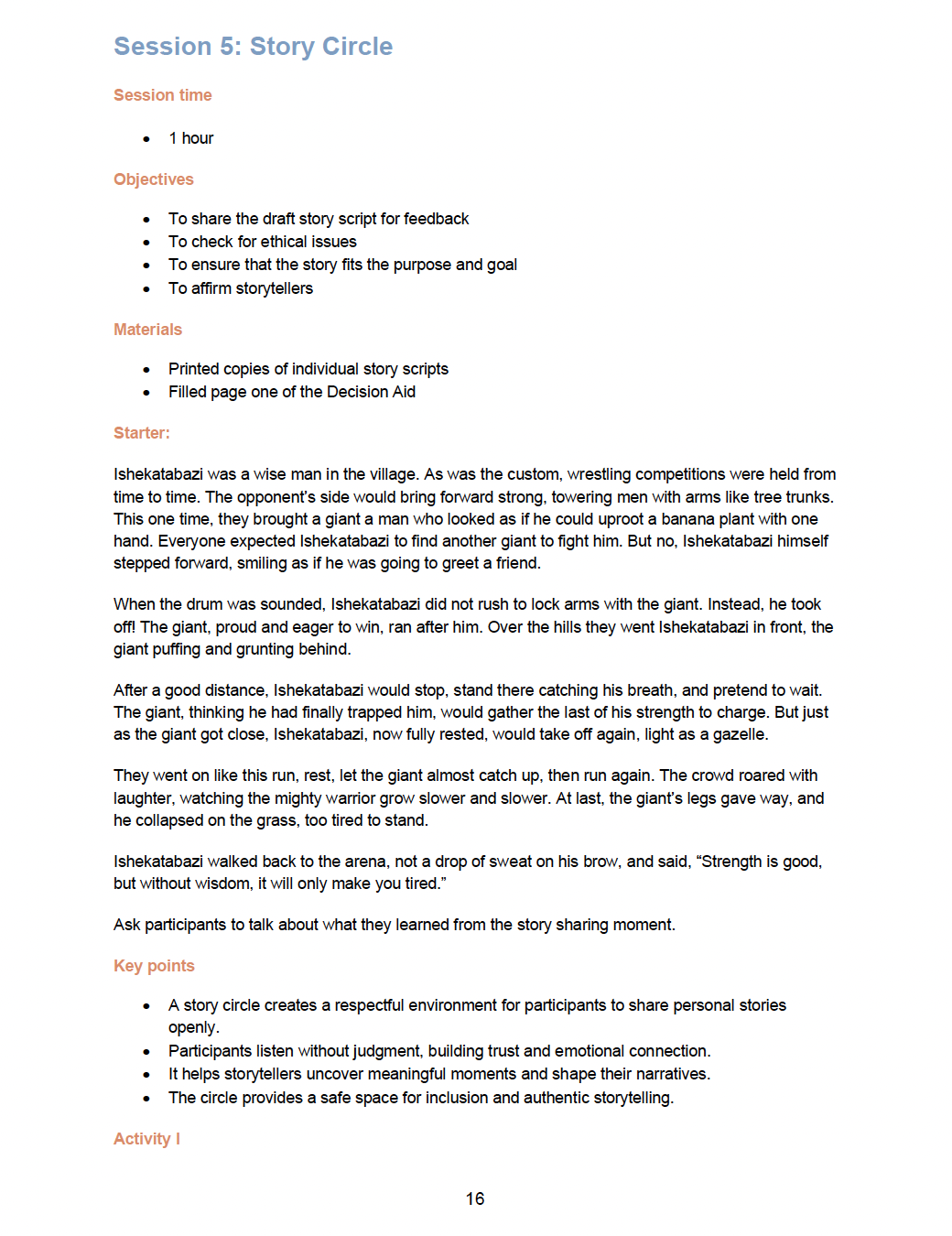 Image 3 of 4
 Image 4 of 4
How to use this manual
This guide has been designed in such a way that it serves the purpose of a blueprint for how you can plan, organize and deliver Digital Story creation workshops.
This manual is divided into four broad training areas/themes:
· Introduction to Digital Storytelling
· Finding and Telling
· Crafting
· Sharing
Each session includes the following:
Session Time: An approximate duration for the session.
Session Objectives: Describe what the participant will be able to understand or do at the end of each session.
Materials: A list of the supplies needed to run the session.
Starter: Short activity that introduces participants to the session
Background: The background is information for you, the facilitator, to help you better understand the session's main concepts. It is critical to always read the background because there may be new information at times, and some words in this manual have specific definitions that you must understand in order to facilitate correctly.
Key Points: The most important messages to be shared and reinforced with participants during the session.
Activity: Each session includes a core activity to assist participants in understanding the Key Points. Activities always follow a set of steps and make use of materials that have been prepared ahead of time.
Debrief questions: The facilitator will ask questions to determine what participants have learned and to encourage group discussion following the session. Through reflection, this section of the session guides participants to their deepest learning.
Preparation: The day before facilitating a session, make sure to read through the session and check that you have all materials ready. Visualize how you will conduct the session. If possible, arrange to have a fellow trainer assist. Some sessions work best if delivered by two facilitators. On the day that you are facilitating a session, remind yourself of the key points before starting the session.
Hints for Success: In the Debrief at the end of each session, you will find one or more discussion questions to ask in the large group. At the end of each day, collect feedback from participants on what worked well and what did not work well. This feedback is then shared with the facilitators during the debrief meeting to help them improve the session for the next time. Make a list of what went well and what you would do differently.
Practice sessions: This manual has practice sessions of; scripting, voiceover recording and crafting. These practice sessions are conducted building on the knowledge acquired from the teaching sessions. During practice, storytellers take lead with support and coaching from the facilitators. Time allocated for each practice session varies on the capacity of storytellers and facilitators and can be as short as two hours or can even take some days. Practice sessions are not in the main manual but on the schedule.
Sample training schedule: Use this schedule or re-arrange the sessions however you like. Pay attention to the Note on timing at the beginning of some sessions if you make your own schedule. Different sessions can be selected to create a shorter or longer course, if desired. When you are building your own schedule, follow a logical order. What sessions will help you reach your goals? What are you communicating to participants through your training? First, choose all the sessions that could help you. Then put them in a logical order. Consider how long the workshop will be. Make sure you can complete the sessions you have chosen.